Making Meaning Through Connected Learning
Published date
May 8, 2026
SCROLL
School systems should base their curriculum not on the idea of separate subjects, but on the much more fertile idea of disciplines...which makes possible a fluid and dynamic curriculum that is interdisciplinary. (Robinson & Aronica, 2009, p.160).
In my last
Drum
piece, I explored how experiential learning lies at the heart of Steiner education. The second pedagogical approach highlighted in the Waldorf UK research paper,
Cultivating the Skills and Dispositions Young People Need to Flourish in Life
, builds naturally from this foundation:
interdisciplinary learning
.
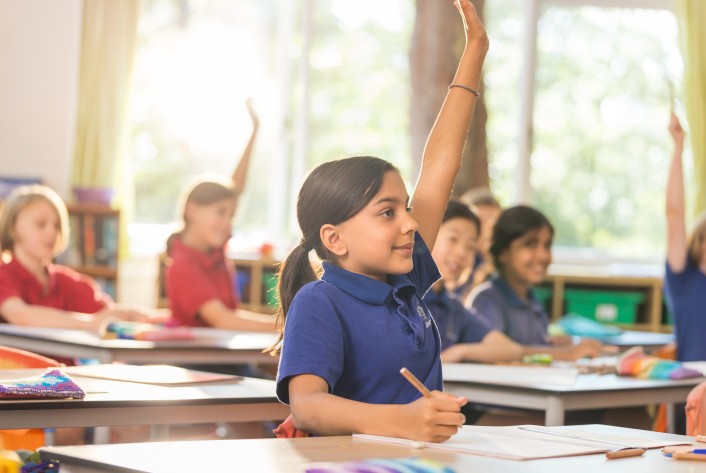
Interdisciplinary learning invites students to make connections across subjects rather than experiencing knowledge as a set of isolated disciplines. In Steiner education, this approach has long been a defining feature. Themes are explored in depth and from multiple perspectives, allowing history, science, literature, mathematics, the arts and practical work to speak to one another in meaningful ways. Learning becomes a whole, living picture, rather than a collection of fragments.
The research confirms that this way of learning supports deeper understanding and stronger engagement. Studies reviewed in the paper show that when students are invited to connect ideas across disciplines, they are more motivated, more able to see the relevance of what they are learning, and more likely to develop a holistic understanding of complex topics. Rather than asking, “Why do I need to learn this?”, students begin to experience how knowledge fits together and relates to the real world.
At Glenaeon, interdisciplinary learning is most clearly expressed through the
Main Lesson
. In Class 5, for example, a study of
Ancient Greece
may weave together history and geography with rich storytelling, artistic representation and mathematical thinking. In Year 7, the
Chemistry of Fire
Main Lesson draws students into careful observation, drawing, written expression, data processing and analysis as they engage with chemical change. In this way, learning is encountered through qualitative experience, strengthening the intellectually abstract creatively and with emotional depth.
The paper also highlights how interdisciplinary learning supports important human capacities: collaboration, critical thinking, empathy and problem‑solving. These qualities develop as students work with ideas from different perspectives, learn to make connections, and engage in meaningful discussion and shared inquiry. In a rapidly changing world where answers are rarely straightforward, the ability to think across boundaries is increasingly important.
Importantly, the authors note that interdisciplinary learning does not replace strong subject knowledge. Rather, the two strengthen one another. At Glenaeon, teachers carefully balance depth within disciplines with opportunities to weave those disciplines together, ensuring that learning remains both rigorous and connected.
For our school community, this research offers reassurance that the integrated, thematic approach we value is not only philosophically sound, but also supported by contemporary educational research. By helping children experience learning as connected and meaningful, interdisciplinary learning prepares them not just for academic success, but for thoughtful, engaged participation in the world.
GlenX Stories: Life After Glenaeon
We are pleased to share details of an exciting inaugural event for our senior students and families.
GlenX Stories: Life After Glenaeon
brings together current Years 10–12 students with recent alumni to hear honest, real‑world stories of study, work and life beyond school. This evening is designed to inspire curiosity, open conversation and gently broaden students’ sense of what the future might hold. Please see the
flyer with registration details below
. In addition, full details were sent to Years 10-12 families in a separate communication today.
Enjoy the weekend,
Diana Drummond
Head of School
Keep Reading
June 5, 2026
June 5, 2026
June 5, 2026